

Jac Larner, Cardiff University
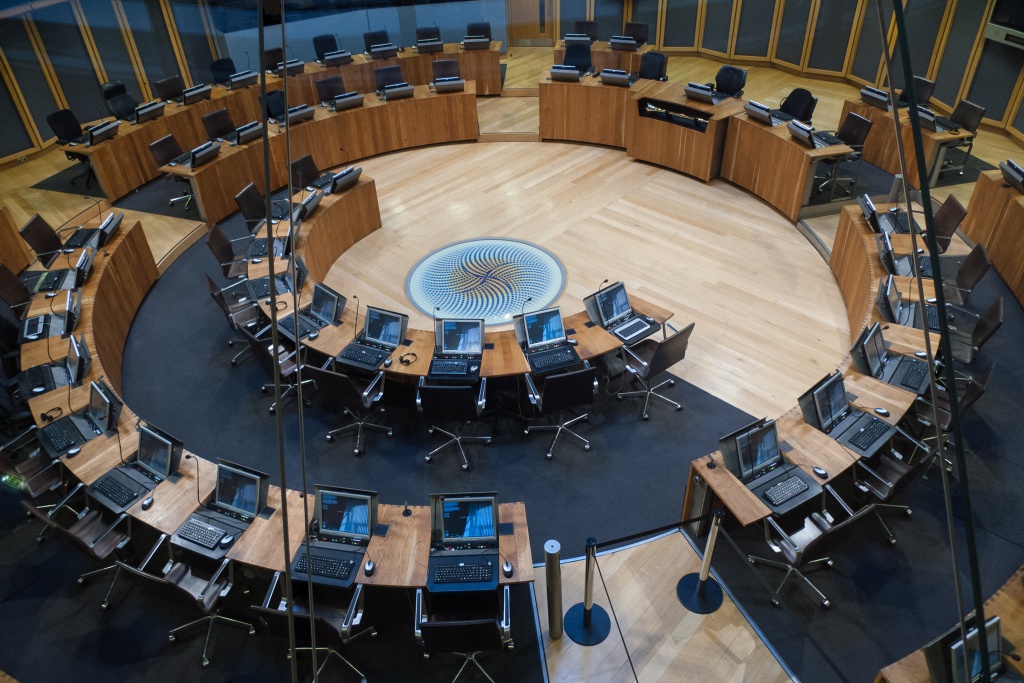
On May 5, voters in Wales will head to the polls to elect the country’s fifth devolved government. This forthcoming National Assembly is set to look dramatically different to all of those preceding it, namely because of the addition of one party – Ukip.
Polls in Wales have shown the party steadily increasing its support, building upon its strong 2015 General Election performance, when Ukip came second to Labour in six of Wales’ constituencies, and third overall in the Welsh popular vote. Indeed, it appears as if nothing is able to stop their march on the Senedd.
Despite a month of media coverage of Welsh Ukip infighting and lack of cohesion, the latest Wales Barometer Poll recorded the party’s highest level of support yet in Wales – 18% at both the constituency and regional level. With the Conservative party at 22% and Plaid Cymru at 19%, there could very well be a three-way struggle for the position of Wales’ second largest party.
For a party that at its peak had just two MPs, both from the South East of England, many outside Wales reacted with shock to the news that Ukip could achieve such significant levels of support in Wales. The Financial Times went so far as to describe Ukip’s position in Wales as “surging”.
However, this characterisation is mistaken. Ukip support in Wales is broadly in line with that of much of England. In the 2015 general election, Ukip received 14.1% of the vote in England – compared to 13.6% in Wales – while in the northeast of England – the region most similar demographically to Wales – Ukip received 16.7% of the popular vote. A YouGov poll on February 4 measured UK-wide Ukip support at 18% –- the same as that recorded in Wales.
The difference is that in Wales, Ukip could realistically convert this support into significant representation in the Assembly. It is less a matter of “surging” support in Wales and more a symptom of an electoral system that could bring them actual power.
The electoral system used in the UK for general elections in effect penalises the sort of broad support that Ukip has (think back to the Liberal Democrats in 2010). In order to win representation at Westminster, it’s necessary to have geographically concentrated support, to win in First Past the Post (FPTP) constituency contests.
For the Welsh Assembly elections, however, a different electoral system is used, one which combines two votes: one FPTP, and one which is a form of proportional representation (PR). This PR section of the vote “penalises” parties that win constituency contests, making it easier for smaller parties to win seats. This system suits Ukip very well, as, unlike Labour, the Conservatives and Plaid Cymru, their broad levels of support aren’t concentrated enough to win constituency seats.
So, while levels of support for Ukip in Wales are not particularly different from anywhere else, the electoral system in Wales is better suited to transform their levels of support into representation.
Though Ukip support in Wales may not be surging, it undoubtedly appears to be increasing steadily: Ukip support in the regional list has grown from 13% in a May 2015 Barometer poll to 18% in the most recent.
What is behind this steady increase isn’t entirely clear. One possible explanation is the dramatic increase in media coverage of the impending EU referendum. Ukip has attempted to position itself, with some success, as representing one side of that debate – so much so that a media discussion of the EU is often accompanied by a mention of Ukip.
With the EU referendum now confirmed to take place shortly after the Assembly elections in May, the EU vote is likely to supplant the National Assembly for Wales as the top political news story. As a result, the publicity Ukip receive will get a significant boost. Indeed, the same Barometer poll that measured Ukip’s support at 18%, also showed that 45% of respondents would opt to leave the EU, compared to 37% who would opt to stay. It’s possible that the interplay between these two political events will only increase as both campaigns get closer.
Whether Ukip can turn this support and coverage into seats in the Senedd, however, will likely be a question of turnout. Turnout is historically lower in Assembly elections – just 41.4% in 2011 – so “getting the vote out” is vital for parties to succeed. Plaid Cymru, for example, has historically been successful at this, achieving vote shares an average 10% higher in Assembly elections than general elections. Ukip, is somewhat of an unknown quantity here.
With the EU referendum just seven weeks after the devolved elections, it will be interesting to see what effect – if any – this has with their supporters. Will Ukip supporters have their attention focused on the “big one”, and neglect the Welsh vote? Or will they be galvanised and use the devolved elections as a launchpad for their campaign? How Ukip supporters react, could well decide the makeup of the next National Assembly for Wales.

Jac Larner, PhD researcher, Wales Governance Centre, Cardiff University
This article was originally published on The Conversation. Read the original article.
Image credit – Marc | Glenn Wood







 My Cardiff North