We asked readers from Cardiff North to tell us what’s happening in their community. This week, Clare Rowthorn tells us about Miss Tilley’s Community Cafe in Rhiwbina, a joint venture with Laura Tilley, developed under the guidance of the charity Purple Shoots. Clare lives in Rhiwbina with her husband Chris and two children Joseph and George. She works at Rhiwbina Baptist Nursery as a Nursery Assistant.
I have a passion for working with children and young people with additional needs and feel very committed to developing an inclusive society in which all people can feel valued and thrive. Miss Tilley’s Community Cafe is a self-reliant group (SRG) trading under the charity Purple Shoots. It’s a joint venture between myself and Laura Tilley with parents, Jo and Derek.
Laura is 22 and lives in Tongwynlais with her parents and brother Marc. Laura has Down’s Syndrome and is the inspiration behind our community cafe. Laura has recently completed a three year course at Derwin College, Shropshire, where she has been living and studying. Laura has now returned home to continue to develop her independence and to pursue her many skills and interests.
Laura and I have been friends for 8 years and met when I applied for a carers post supporting Laura on her return home from school each day. Laura and I hit it off over a shared love of music and dancing in particular to Justin Bieber! Over the years Laura, myself and our families have become firm friends.
On Laura’s return from college a joint venture began with the launch of “Miss Tilley’s Community Cafe (SRG)”. Laura and I have recognised that on leaving school and college people with additional needs and disabilities find it very challenging to find employment and this can lead to them feeling undervalued and isolated. The aims of our cafe are to “promote equality and celebrate diversity” and we have identified the community as playing a vital role in supporting young people in reaching their potential and essentially in recognising their self worth.
The communities of Rhiwbina and Tongwynlais have been hugely supportive of our venture. Beulah United Reformed Church have very kindly provided us with The Whittaker Lounge as a weekly venue for our cafe and we have been overwhelmed by the support and kindness of customers and willing cake makers from both villages. We are very grateful and excited that so many people share our vision of inclusion and meaningful employment for all. At Miss Tilley’s everyone is welcome and all can come and enjoy excellent quality tea, coffee and cakes in an accepting and inclusive environment.
Miss Tilley’s is open every Monday during term time from 10:00 – 12:30 at The Whittaker Lounge, Beulah United Reformed Church, Rhiwbina.
We’re planning a ‘Pop Up’ event in Tongwynlais Village Hall on the 15th October serving tea, coffee and cakes. Details will be posted on the Miss Tilley’s Community Cafe Facebook page.
We would like to thank everyone for their ongoing support of our community venture, and look forward to welcoming you to our cafe soon!
The Boundary Commission for Wales have published proposals for boundary changes to Welsh constituencies.
The number of constituencies in Wales must be reduced from 40 to 29. By law, every constituency proposed must contain between 71,031 and 78,507 electors.
Cardiff North currently has an electorate of 67,194*. The proposed changes would increase this to 78,014.
We would lose Pontprennau and Old St Mellons while gaining Taffs Well, Cyncoed and Pentwyn.
The Boundary Commission for Wales are hosting several public hearings. The Cardiff hearings are at the Mercure Holland House Hotel on Wednesday 26 October – 10am – 8pm and Thursday 27 October – 9am – 5pm.
I didn’t fancy staying up all night so I hit the sack and caught up with the progress in the morning. The result was finally declared at 7:00am. Labour held Cardiff North.
Devolution in the UK has meant that the non-English nations have divided government control over major areas of public policy. On some matters, UK government policies still affect people directly; on others it is the governments in Edinburgh, Cardiff and Belfast that decide.
Though devolution itself has great potential in theory, the division of control creates the potential for public confusion: do people actually know which government is responsible for what?
Public knowledge matters for democratic accountability. If people don’t understand which government does what then they cannot hold the relevant politicians accountable at elections. Some may receive blame, or credit, which they do not warrant; others may escape deserved responsibility.
The evidence thus far has not been encouraging. Previous studies in Scotland and in Wales have shown plenty of confusion about which government does what. Some work has also shown an asymmetry of policy attributions: with people in both Scotland and Wales tending to blame government in London for perceived poor performance in major policy areas, but giving credit to governments in either Edinburgh or Cardiff where things are believed to have improved. This may be convenient for some politicians in Holyrood and Cardiff Bay, but it is not politically healthy in the long-term.
Recently, however, there has been a major attempt by the Conservatives to address this problem in Wales. This has not stemmed from high-minded concern for democratic proprieties, but from raw politics: with public perceptions of NHS performance in Wales being poor, the Tories have wanted the Labour Welsh government to get the blame. Labour’s management of the NHS in Wales has been attacked in vitriolic terms, and the Conservatives suggested that this is emblematic of broader Labour incompetence.
Is this having any effect? And on health, or indeed in other major policy areas, are Welsh voters approaching the forthcoming National Assembly election with a clearer idea of who is responsible for what than they did in previous elections?
Devolution in practice
To explore these questions, I’ve examined evidence from two major academic surveys: the pre-election wave of the 2016 Welsh Election Study, conducted in early-mid March this year; and the first wave of the 2011 Welsh Referendum Study, conducted at almost the same time before the 2011 National Assembly election.
A near-identical set of questions was run in the two surveys. These asked, first, whether people perceived improvements or declines in key areas of public policy since the previous National Assembly election; and, second, whether people attributed any improvements or declines mainly to the UK government, the Welsh government, or both equally.
Four topics were asked about: health, and education, high-profile areas where policy responsibility has been largely devolved, and “standard of living”, and “law and order”, areas where power and responsibility largely remains with the UK government.
The figure below shows the balance of opinion (the net percentage of those perceiving improvements minus those perceiving declines) in each of the four policy areas in both 2011 (blue) and 2016 (red).
Roger Scully, Author provided
A few things are noticeable here: first, the balance of opinion on all issues is negative. In both 2011 and 2016, across all issues, more people perceived decline rather than improvement.
Second, and perhaps most strikingly, there has been a huge decline in public perceptions in the area of health between 2011 and 2016. Even if they haven’t caused such perceptions, attacks by the Conservatives and others on the Welsh NHS will likely have chimed with many voters’ views.
Finally, in the two areas under Welsh government control, the balance of opinion has become more negative since 2011, while in the two areas of UK government responsibility, public perceptions have become less negative.
But were perceived improvements or declines actually attributed to the “appropriate” level of government in any of these policy areas? Investigating this requires some careful unpicking of the data. Below are two tables, one for 2011 and one for 2016. They chart which level of government was assigned primary responsibility for perceived improvements or declines in each policy area.
Roger Scully, Author provided
We see that in 2011, those perceiving improvements in health and education in Wales tended to view the Welsh government as responsible. This is encouraging; much less so is that many people also credited the Welsh government for improvements in those areas where it had much less power. We also see that people who perceived declines were substantially more likely to blame the UK government than those perceiving improvements, and that this was true both of devolved and non-devolved policy areas.
Have things changed? Our new evidence suggests that they have, to some extent, in the field of health. Compared to 2011, Welsh people in 2016 are more likely to assign responsibility to the Welsh government for policy outcomes in health, whether it is for improvement or decline overall. But in the other policy areas there is now a clear general pattern, and there remains a tendency for people to be disproportionately likely to give credit to government in Wales, but assign blame to government in London.
The long-term health of a system of devolved governance surely requires clarity of policy responsibility. In Wales, the latest evidence indicates that the strong political attacks that have been made on the Welsh government’s management of the NHS may have induced greater clarity for many Welsh voters on this issue. However, health appears to be more the exception than the rule. In general, any clear division of government responsibility in the minds of voters, and accountability for what each level of government does, seems to remain elusive.
The 2011 Welsh Referendum Study was funded by the Economic and Social Research Council (Grant RES-000-22-4496). The pre-referendum wave interviewed 3,029 respondents between 3 February-2 March 2011; fieldwork was conducted via the internet by YouGov.
The 2016 Welsh Election Study is funded by the Economic and Social Research Council (Grant ES/M011127/1). The pre-election wave interviewed 3,272 respondents between 7-18 March 2016; fieldwork was conducted via the internet, by YouGov.
Jane Morris hosted a debate on Radio Cardiff with four constituency candidates. David Melding stood in for Jayne Cowan, who couldn’t make it. David has been an AM since 1999 and is second on the Conservative regional list. John Dixon and Elin Walker Jones were invited but couldn’t attend.
You listen to the debate in the widget below.
The debate covered housing and the NHS with a brief discussion about independence before wrapping up.
Haydn Rushworth is the UKIP constituency candidate for Cardiff North.
The views expressed in this article are those of the author and do not necessarily represent the views of, and should not be attributed to, My Cardiff North.
In times of war, when national crisis demands that every citizen unifies behind a single goal and great, personal sacrifices for the greater good are common, young people have always been at the front and centre coming to the rescue of the entire nation.
Following the Battle of Britain, when Churchill said “Never in the field of human conflict, has so much been owed by so many to so few”, it emerged that the average age of the brave pilots who defended Britain was just 20 years old.
Today, Wales is facing a national catastrophe of crisis proportions. It affects absolutely every aspect of life in Wales, and it is the central threat to the hope-filled future that today’s young people SHOULD be looking forward to.
I’m talking about the Welsh share of the National Deficit. This is the amount of money that government must borrow each year to make up the difference between taxes raised (money in) and public spending (money out). The University of Cardiff recently published a report that calculated that the Welsh share for last year was an eye-watering, crippling, UN.BE.LIEVABLE… £14.7 billion… for JUST ONE YEAR!!!!!!!
Now, you may hear big numbers thrown about a lot and not think much of it, but lets put this into some context. We are on the verge of a National Referendum on whether the UK should leave the EU. Part of the reason for raising this question is that it costs the UK £8 billion each year just to remain members. So what if we leave? We’ll save £8 billion per year. What if, somebody takes a little peak at the near-£15 billion (almost double) that Wales costs the national economy every year and asks the awkward question “so, errr… should we now hold a referendum on whether the UK should leave Wales?”
Of course that’s not going to happen, but even so, if we don’t act now, the next generation will pay a heavy price, and that’s what UKIP wants to avoid.
So what’s the answer?
Unlike other political parties who will try to convince you they THEY are the answer to all your problems, UKIP believes that no single government can solve this problem. It’s too big, and it involves all of us. UKIP Believes that people power, not government power, is the most critical element.
Fundamental reforms to the education system are necessary so that every young person is trained and empowered in the art and craft of wealth-creation. As individuals become wealthy, the entire Welsh nation becomes wealthy.
Young People MUST lead this revolution, then the rest of Wales will follow.
The deficit crisis needs to be the Number 1 priority for the Welsh Assembly, and if enough people demand this, they will have to listen and start to act. Vote UKIP to let your voices be heard.
For more information on my personal proposals for tackling the Deficit Crisis, go to haydnrushworth.com.
Jayne Cowan is the Conservative Party’s constituency candidate for Cardiff North.
The views expressed in this article are those of the author and do not necessarily represent the views of, and should not be attributed to, My Cardiff North.
In this election campaign, my team and I have delivered hundreds of thousands of leaflets across Cardiff North – from Rhiwbina, to Llandaff North, Thornhill, Llanishen, Lisvane, Pontprennau, Old St Mellons, Heath, Tongwynlais and Whitchurch.
With Labour only one seat from losing power, Cardiff North will be critical to deciding who is in government in Wales in only a few days’ time. Hopefully, all this literature has given a flavour as to the work I’ve been doing for the constituency I’ve lived in my whole life, and what I plan to do if elected as the Assembly Member for Cardiff North on May 5th.
Of all those pieces of paper, the leaflet I was proudest to deliver was one which contained a series of endorsements from local small businesses and shops. From an award-winning Whitchurch butcher – Martin Player, to Caerphilly Road’s Younger’s Fish Bar, Elizabeth of SP1 Hairdressers, or the owners of the Gateway of India, these local enterprises help make our community tick.
Cardiff North has some stunning high streets, which I will always passionately support. They are places to shop, socialise and share, and act as local hubs we must treasure. As such, we need to do more to support our bustling community spaces and help them thrive. Sadly, under Labour, high street vacancy rates in Wales are the highest in the UK – and, after 17 years with them at the helm, enough is enough.
Cardiff is reaping many benefits from the UK Government’s record of economic delivery – but Labour has failed to utilise the devolved levers at its disposal to build on that. Indeed, if every small business in Wales could employ just one extra member of staff, unemployment could be eliminated at a stroke. That’s why a Welsh Conservative administration would ensure any business with a rateable value of under £12,000 pay no rates whatsoever, with tapered support provided up to £15,000. Furthermore, by splitting the business rates multiplier, we can give all smaller businesses a fairer deal.
Keeping people on our local High Streets not only fuels local economies, but fosters a greater sense of community spirit. High streets, indeed, are about more than just shops. As part of a dedicated plan to back the Welsh high street, our manifesto contained a commitment to encourage the development of responsible night time economies. In Whitchurch, and elsewhere, we’ve seen the benefits this can have.
Underpinned by a focus on inclusive, community-led regeneration, and the development of a Welsh High Street Charter, encouraging the sharing of best practice, a renewed focus on High Street support must be a key focus for the next Welsh Government, and would have huge benefits across Cardiff North. I’m proud of our plan to do just that.
Welsh Conservatives want to lead a Welsh Government which is the most small-business friendly ever. The proposal to establish a ‘Small Business Hub’, scrutinising all Welsh Government policy for its impact on small firms, is testimony to that focus. In Cardiff North, this approach could play a pivotal role in boosting employment, supporting our proud High Streets and nurturing our local area’s proud entrepreneurial spirit – and is something I’ll continue to shout from the rooftops as polling day approaches.
Chris von Ruhland is the Green Party’s constituency candidate for Cardiff North and regional list candidate for South Wales Central.
The views expressed in this article are those of the author and do not necessarily represent the views of, and should not be attributed to, My Cardiff North.
Will our grandchildren inherit our IKEA furniture?
Probably not.
While it is of moderately good quality, it is unlikely to last that long due to wear and tear or, more likely, being discarded in favour of something newer.
We are constantly bombarded by advertisements that show happy smiling people dancing around their latest acquisition, often in living rooms the size of the ground floor of most people’s houses. The adverts are designed to make us feel inadequate and intimate that our lives will be so much better if we buy the latest sofa, flat screen, or car. It is, of course, a fantasy. But is clearly works, otherwise companies wouldn’t do it.
The pleasure we derive from our latest purchase is transitory, however. The novelty wears off and we find ourselves hankering after something else, because what we have purchased will soon be deemed outdated. But fear not; there is always something else that we can be persuaded to buy.
And so we carry on, working longer hours than we would like, to earn money to buy stuff that doesn’t last, that we don’t really want and certainly don’t need, in the hope that it will satisfy us (it won’t). This is consumerism.
Fun, isn’t it.
Wouldn’t it be nice if we didn’t have to do this?
Wouldn’t it be nice if we could spend more time with our friends and families, enjoying ourselves and just being human. We could have more time to cultivate our creativity. We could be a lot happier.
Wishful thinking?
Actually no.
What if we designed things to last and be easily repairable? We wouldn’t need to keep replacing them. If we lived healthier lifestyles, we wouldn’t need such a huge and expensive health service. If we were encouraged to use local businesses rather than chain stores and multinationals, money would be more likely to stay in the area rather than being squirreled away in tax havens. If we built houses to be energy positive, like Cardiff University’s Solcer house, we wouldn’t need to spend so much on bills, and people wouldn’t have to choose between eating and heating. If we had a decent public transport system, our roads would be less congested and it would be much safer to cycle, so we wouldn’t need cars so much; many of us might even be able to do without them altogether.
So we wouldn’t need so much money. So we wouldn’t need to work so much. So we’d have more time to spend on things that actually mattered.
And we’d reduce our consumption of the earth’s finite resources.
Because our current lifestyle is wrecking the planet. If everybody on earth lived as we do in Wales, we’d need 2.5 planets. Which we don’t have. So we can’t carry on as we are. Or we can, and leave the consequences for our children and our grandchildren to sort out. And the very poorest people will suffer the consequences of our inaction the most. Not to mention the countless species that will go extinct. The future is very much in our hands.
It’s unreasonable to expect everybody to suddenly change to a more sustainable lifestyle by themselves, even though some do. What is needed is leadership, and there is precious little of this at the moment.
All too often, politicians have to balance the demands of the electorate with limited budgets, all within one term of office. Perhaps it is not surprising that they have little time to give thought to long terms plans. Or perhaps it is. After all, their long term political survival, their desire to see their particular political philosophies realised depend upon them.
But that is what we need; a vision of Wales that goes far beyond the four years to the next election. A vision of Wales in 50 years’ time and beyond. For these are the timescales that we need to think in terms of. Which is why we need Greens in the Senedd. A central theme of green philosophy is to live in such a way that does not compromise future generations; to leave the planet in at least as good a state, if not better than we received it. We do not inherit the earth from our ancestors, we borrow it from our descendants.
So when you come to vote in the elections on the 5th of May, I’d like you to ask yourselves the following question: what sort of world do you want your children and grandchildren to inherit?
Julie Morgan is the Labour Party’s constituency candidate for Cardiff North.
The views expressed in this article are those of the author and do not necessarily represent the views of, and should not be attributed to, My Cardiff North.
In March I attended an event at Velindre Cancer Centre in Whitchurch to hear some very good news – the Welsh Government announced it was supporting the creation of a Maggie’s centre at Velindre with £1.5m funding.
This is something I’ve long campaigned for, as well as being a long-time supporter of Velindre itself. For those diagnosed with cancer and their families Maggie’s provides a ‘kitchen table’ atmosphere and free, practical and emotional support at a very difficult time in their lives.
As chair of the Assembly’s Cross-Party Group on Cancer I held a meeting to help highlight how a Maggie’s for Cardiff will benefit patients across the whole of South East Wales. Patients from Maggie’s in Swansea, which I’ve visited several times, came along and really brought home the benefits of having a Maggie’s.
I’m proud of the £200m investment by the Welsh Labour Government to redevelop Velindre to make it a state-of-the-art cancer treatment centre. And I’m pleased that, while there’s still much more we can do to help people diagnosed with cancer, the April statistics on cancer waiting times show:
86.8% of patients (485 out of 559) newly diagnosed with cancer via the Urgent Suspected Cancer route started definitive treatment within the target time of 62 days.
98.6% of patients (774 out of 785) who were newly diagnosed with cancer not via the Urgent route started definitive treatment within the target time of 31 days.
cancer survival is increasing faster in Wales than in the UK. Survival rates after one and five years are growing faster in Wales than in any other UK nation
Another health achievement I’m pleased to have played a part in was the announcement last September of £13.8m funding for life-changing new drugs for those who contracted Hepatitis C from infected blood. I’ve supported Haemophilia Wales – run by a Lisvane resident – in its long campaign for these drugs and it was very moving to meet one of the first people to be helped by the new drugs whose life truly had been changed as he was free of the disease for the first time in 30 years.
Key health achievements in the last five years
Health is such a key issue – all of us need the services of the NHS at some time in our lives – and I believe its importance can’t be overstated. Some of Welsh Labour’s achievements I’m most proud of are:
£63.8m second phase of Noah’s Ark Children’s Hospital
Free prescriptions and free hospital parking
£85m investment to increase the number of nurse training places
There is no junior doctors strike in Wales and Wales was the first country in the UK to introduce a living wage for all NHS staff
Capped domiciliary care charges
£4m to support elderly and disabled people to live in their own homes
£7.5m revamp of the Special Care Baby / Neonatal Unit at UHW
£172 more per person spent on health and social services in Wales than in England
What we promise for the Welsh NHS in the next five years
We’ll protect the NHS in Wales from a costly and disruptive re-organisation, and protect it from privatisation
We’ll continue to invest in the NHS and to spend more per person on health and social care than in England, and promise to integrate health and social care
We’ll continue to ensure healthcare services are available closer to people’s homes – there are plans for more cancer treatment from Velindre at hospitals across SE Wales, for example, so very ill people do not have to travel such great distances
We’ll continue to respect hardworking and dedicated NHS staff in Wales
We’ll introduce a New Treatment Fund to give people in Wales fast access to new and innovative treatments for all life-threatening conditions
My personal pledges on health
If re-elected there are many more health issues I will campaign on and I’ll continue to support the redevelopment at Velindre and making Maggie’s a reality in Whitchurch.
My support for fair payments for people with haemophilia is ongoing – and in this, as in all health issues, I will always work flat-out for fairness and for constituents who come to me with health problems. I’ve done throughout my time as your elected representative in Cardiff North and, if you give me the chance, will continue to do so in future.


 Laura is 22 and lives in Tongwynlais with her parents and brother Marc. Laura has Down’s Syndrome and is the inspiration behind our community cafe. Laura has recently completed a three year course at Derwin College, Shropshire, where she has been living and studying. Laura has now returned home to continue to develop her independence and to pursue her many skills and interests.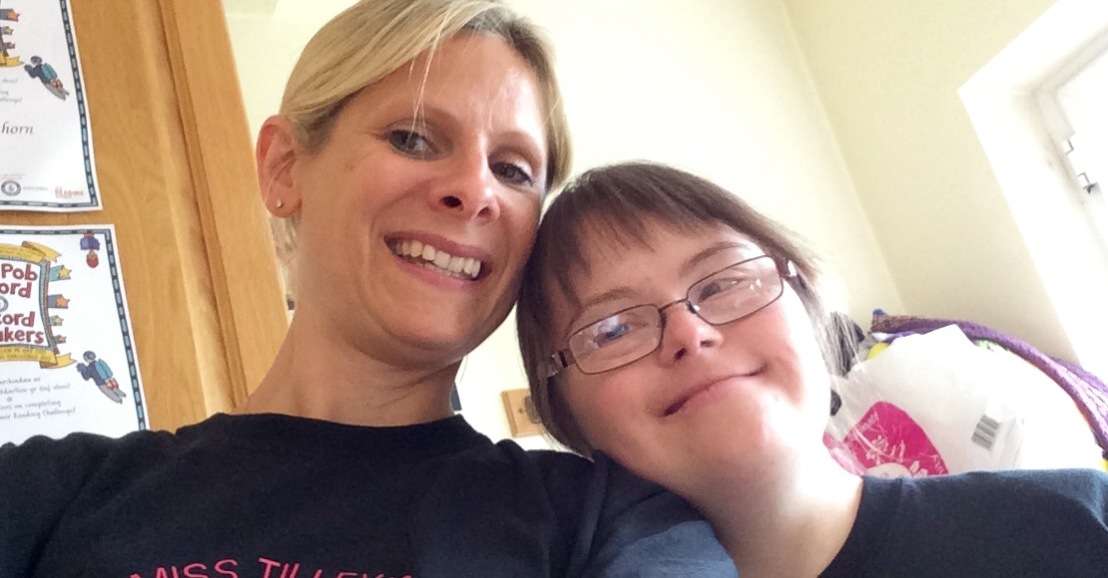



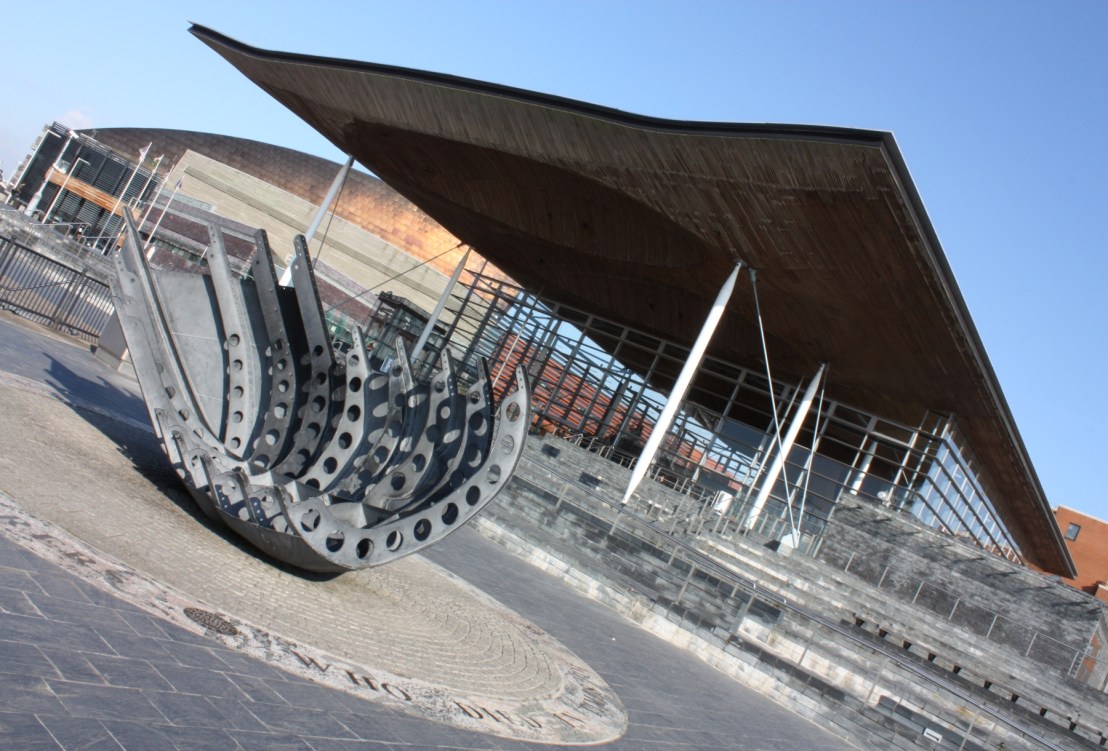




 Today, Wales is facing a national catastrophe of crisis proportions. It affects absolutely every aspect of life in Wales, and it is the central threat to the hope-filled future that today’s young people SHOULD be looking forward to.
 Cardiff is reaping many benefits from the UK Government’s record of economic delivery – but Labour has failed to utilise the devolved levers at its disposal to build on that. Indeed, if every small business in Wales could employ just one extra member of staff, unemployment could be eliminated at a stroke. That’s why a Welsh Conservative administration would ensure any business with a rateable value of under £12,000 pay no rates whatsoever, with tapered support provided up to £15,000. Furthermore, by splitting the business rates multiplier, we can give all smaller businesses a fairer deal.
 What if we designed things to last and be easily repairable? We wouldn’t need to keep replacing them. If we lived healthier lifestyles, we wouldn’t need such a huge and expensive health service. If we were encouraged to use local businesses rather than chain stores and multinationals, money would be more likely to stay in the area rather than being squirreled away in tax havens. If we built houses to be energy positive, like Cardiff University’s Solcer house, we wouldn’t need to spend so much on bills, and people wouldn’t have to choose between eating and heating. If we had a decent public transport system, our roads would be less congested and it would be much safer to cycle, so we wouldn’t need cars so much; many of us might even be able to do without them altogether.
 As chair of the Assembly’s Cross-Party Group on Cancer I held a meeting to help highlight how a Maggie’s for Cardiff will benefit patients across the whole of South East Wales. Patients from Maggie’s in Swansea, which I’ve visited several times, came along and really brought home the benefits of having a Maggie’s.
 My Cardiff North